Showing posts with label Connection Planning Series. Show all posts

Saturday, June 19, 2010

Connection Planning Part 3: Talk About Timing!

 Part 3 of the Connection Planning Series will explore the idea of reaching the consumer at the right time. Want to read more about connection planning, the idea of reaching the consumer when they're in the right mindset, and the idea of using the consumer's environment to enhance the message? Check out Connection Planning Part 1: Mastering the Mindset and Connection Planning Part 2: Enhancing the Environment.

To recap, here's the framework we've been using:


A Framework for Connection Planning
This framework involves thinking about the situation in three non-mutually exclusive ways:

1) When is the consumer in the mindset that makes the idea most relevant?
2) When is the consumer in the environment that will bring the idea to life?
3) When is the right time to reach the consumer so they can act on the idea?

This post in this series will cover the final point -finding the right time.


Talk About Timing!
When talking about timing, we must ask ourselves, "When is right time to reach the consumer so they can act on the idea?"

Time represents the exact moment of time in which the consumer is in the right place and the right situation for them to act on, or respond to, the brand's message, an idea that's sometimes known as recency. When the problem to be solved or the brand idea being communicated relies on the consumer to be in a certain point of the day or a certain situation, we need to find the moments when the brand message will be especially relevant. Preferably, the product or service that we're selling will be close enough to that message in time and space so that the consumer can act on that message as soon as they've been impacted by it.

Unlike finding them when they're in the right mindset and enhancing their environment, reaching consumers at the right time is more about conversion than it is about building the brand idea. When the consumer is reached at a moment when the message is most relevant to them and in a place where they can actually act on that moment, the tie between awareness and conversion is much stronger.

Below are two examples of campaigns that have reached consumers at the right time.


McDonald's Brightens Our Mornings with Eggs and Free Coffee
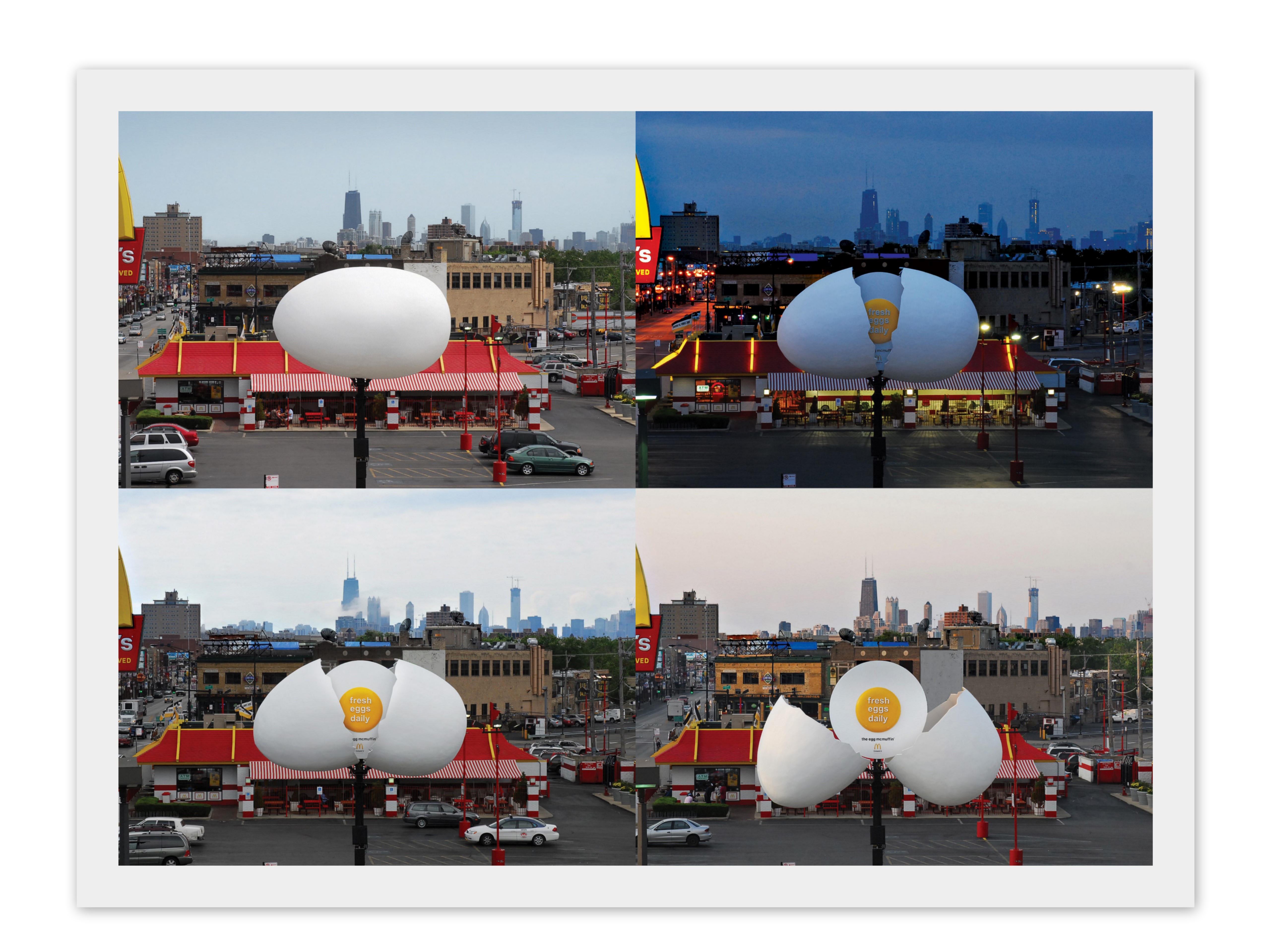
 McDonald's has always been smart about using connection planning to reach their consumers at the right time, often going beyond TV and making use of some very innovative out-of-home. In one case, McDonald's was looking to build awareness of the fact that the restaurant uses freshly cracked eggs every morning to make its Egg McMuffins. In the other, McDonald's needed to build awareness of a new breakfast burrito. Finally, the restaurant was looking to build buzz and trial for its coffee relaunch by giving it away in the mornings for free.

When is the right time to talk to consumers about eggs, breakfast burritos, and free coffee? The morning of course! In each of these examples, the brand tried to reach their consumers at the point during their day when they're most likely to respond to, and act on, their messages. What are those moments exactly? How about when you've ran out the door and are trekking along on your morning commute? How about when you're unwrapping the morning paper? How about when you're about to get into work and are itching for a dose of caffeine?


For the freshly cracked eggs campaign (see the image at the top), the brand set up a unique OOH execution that was timed along with the morning sunrise. As the morning wore on, the egg would crack open, revealing the yolk on the inside. For the breakfast burrito campaign, a Toronto Sun cover wrap, along with the wrap that keeps the newspaper in a roll, combined to create the illusion of a breakfast burrito arriving at your doorstep, wetting your apetite. Finally, a steaming cup of coffee, a transit shelter filled with coffee beans, and a lamp post converted into the sight of a freshly poured cup of coffee, all worked to get the attention of consumers as they were on their way to work.

P&G Encourages Fashionistas to Save on Laundry Care


P&G needed to build awareness and sales for two new products that it was launching - Tide Total Care and Downy Total Care. Both of these detergents aim to help consumers cut down on their dry cleaning bill by ensuring that their clothes look better longer. The idea is that with these new products, consumers can machine wash clothes that they would normally take to the cleaners.

What better time to reach them with this message than when they are in the store, shopping for new clothes? P&G partnered with US clothing retailer Ann Taylor Loft to feature the two brands in stores. Not too far removed from a shoe store attempting to sell customers shoe shining liquid to go along with the pair of shiny new shoes they've bought, shoppers at Ann Taylor Loft who have just bough brand new clothes are more likely to respond and act on a message about caring for those clothes from P&G.

Sales associates at the chain handed out coupons and free product samples to shoppers that bought machine washable clothes, while posters and decals were placed throughout the store to call out the benefits of washing the clothes with Tide and Downy. In addition, Ann Taylor Loft produced a free 8-page magazine giving its shoppers tips on maintaining the look and feel of their clothes (which of course included using the new P&G products).


That's it for now! If you have any interesting examples of connection planning that you'd like to share with me, please do. And the next time you're planning a campaign, remember to ask yourself: am I reaching the consumer in the right mindset, environment, and at the right time for her to act on my message?

Saturday, June 12, 2010

Connection Planning Part 2: Enhancing the Environment

 Part 2 of the Connection Planning Series will explore the idea of using the consumer's environment to enhance the brand's message. Want to read more about connection planning and the idea of reaching the consumer when they're in the right mindset? Check out Connection Planning Part 1: Mastering the Mindset.

To recap, here's the framework we've been using:


A Framework for Connection Planning
This framework involves thinking about the situation in three non-mutually exclusive ways:

1) When is the consumer in the mindset that makes the idea most relevant?
2) When is the consumer in the environment that will bring the idea to life?
3) When is the right time to reach the consumer so they can act on the idea?

This post in the series will cover point number two - the consumer's environment.


Enhancing the Environment
When enhancing the environment of our consumer, we must ask ourselves, "When is the consumer in the environment that will bring the idea to life?"

The consumer's environments are the places and situations that surround them throughout their day. These could include both the physical environment that they're in as well as the non-physical. When the problem being solved or the brand idea being communicated relies on the consumer to be feeling like they're in a certain place, we must look for a time and place during the day or week when we can manipulate an environment to make them feel that way. When the brand idea relates to a feeling or emotional state of being that isn't necessarily tied to a physical space, but rather a sound, smell, taste, etc., we have to look for the time and place where they're most likely to be responsive to that.

Thus, when the consumer is in the right environment to receive a certain message, or when the message is specifically relevant to the environment that a consumer is in at that moment in time and space, the impact of the message is much greater than something more generic.

Below are three examples of campaigns that have enhanced the environment of the consumer.


Subaru Tells Couch Potatoes to Get Out More


Subaru needed to find a way to communicate that its latest iteration of the Outback wagon was perfect for consumers looking to take advantage of the vehicle's all-wheel-drive to explore more rugged terrain. The brand idea was that the Outback can help consumers "get out more".

Thus, the brand needed to reach consumers in an environment when they are most likely to be responsive to the idea of getting out a bit more. What better environment to enhance than the living room, home of couch potatoes staring mindlessly like zombies at their flat-screen entertainment centers? Subaru's TV spot sought to play on this environment by toying with the nature of the television screen.

The spot begins with a typical, late-night infomercial for the Snuggie, a commercial that's bad enough to be interesting but not enough to be boring. After drawing you in, the ad suddenly surprises, as a crowbar emerges from behind your TV screen and rips it right out. Immediately your TV has become a window into an idyllic forest landscape, opening your eyes to what you're missing out on. Idling in the center of this beautiful landscape, of course, is the Outback.

Mini Brings its Message to the Roadways


Mini needed to communicate several advantages of being a Mini driver, including driving a really fast car with "go kart" handling. The brand is also famous for building a repoire with those who drive Minis. The best environment to do that, of course, is on the road, where people are actually thinking about driving.

Mini played upon several environmental insights. The first is that people who love to drive above the speed limit often scan their environment to look for police or speed traps. Mini, being a friend to fast drivers, decided to help out, with billboards warning drivers about waiting cops with copy like "Cops hide here." Of course, police weren't necessarily hiding there, but drivers got the point. Another insight is the tendency of drivers to scan their environment for anything that might be out of place while driving. In the "Let's motor" billboard above, the brand hopes drivers will do a double-take at the palm trees bending from the speed of a Mini blowing by.

Finally, drivers are often scanning their environment for critical information, like those on digital boards that are set up along highways and roadways. In the final image above, Mini set up its own digital information board. Rather than providing critical information, however, the boards provided smiles - as Mini owners drove by, the board used a digital signature to recognize the driver by name and offer a quick hello.

Scream TV Brings Supernatural Sound to the Streets


I'll keep this write-up short since the video below pretty much explains the background, insight, and execution of this campaign. But in a nutshell, Scream TV (now called Dusk), a specialty TV channel, enhanced the non-physical environment of innocent bystanders by projecting sounds that would freak them out. What a great example of using the environment to bring a brand idea to life!


In the next post in the Connection Planning Series, we'll explore the idea of reaching the consumer at the right time...

Saturday, June 5, 2010

Connection Planning Part 1: Mastering the Mindset

I'd like to begin a short series on a discipline of strategic planning that I have a lot of heart for - Connection Planning.


What is connection planning? In a nutshell, it's planning that seeks to find the connection between the consumer, the brand idea, and the right media moment. Why do I have heart for it? Let's just say I'm a planner that's part creative and part media guru, and so connection planning is right up my alley!

Part of the reason connection planning is becoming more and more relevant is the growing disconnect between a client's creative and media agencies. More often than not, clients will have a media planning and buying agency that will buy space in traditional forms of media (ie. TV, print...) long before the client's creative agency ever receives a client brief. The result of this? Creative teams are forced to come up with ideas that fit the media that's been booked (ie. scripts and print ads). Not much room for big ideas there. Connection planning seeks to tie creative and media planning together. No longer does the message have to be crafted to fit the medium. Rather, the medium becomes the message!

Another reason why connection planning is much more integral these days is the increasing fragmentation of media. We hear it all the time in the industry press. Clients and agencies are growing more and more wary of a media landscape that involves much more than just TV and print. "If people are spreading their time across so many different forms of media, how are we supposed to reach them?" you might ask. Well, media fragmentation is actually a boon to connection planning. If people are spending more time with more things in more places, that means that there are actually more opportunities to reach them. And because those opportunities are spread out in terms of space and time, we can strategically choose the right place and the right time to reach them with the right idea. That is connection planning.

"But wait," you might ask, "this sounds all well and good, but is there an official framework for thinking about how to connect with consumers this way?" No, there isn't. Each agency and planner will have their own framework for thinking and working out how to find the right moments. That said, I'd like to share my own here.


A Framework for Connection Planning
This framework involves thinking about the situation in three non-mutually exclusive ways:

1) When is the consumer in the mindset that makes the idea most relevant?
2) When is the consumer in the environment that will bring the idea to life?
3) When is the right time to reach the consumer so they can act on the idea?

This first post in the Connection Planning Series will cover point number one - the consumer mindset.


Mastering the Mindset
When mastering the mindset of our consumer, we must ask ourselves, "When is the consumer in the mindset that makes the idea most relevant?"

That mindset can skew both rational and emotional. When the problem to be solved or the brand idea being communicated relies on the consumer to be thinking about a situation in a logical, rational manner, we must find a time and place during the day or week when that's the case. When the brand idea relates to a certain feeling or emotional state of being, we have to look for the time and place where they're most likely to be responsive to that.

The bottom line: when the consumer is in the right mindset to receive a certain message, or when the message is specifically relevant to the mindset that a consumer is in at that moment in time and space, the impact of it is much greater than something more generic.


Below are three examples of campaigns that have tapped into the mindset of the consumer.


Windex Keeps Fitness Centers Germ-free

 
Windex is a brand of cleaner that's traditionally known for leaving windows sparkling, and not a brand you would think of when it comes to killing the germs on the surfaces in your bathroom and kitchen. And so, with the launch of a new Windex multi-surface anti-bacterial spray, SC Johnson was tasked with building awareness of the new product and showing their consumer that Windex was up to the germ-killing task.

What better way to do that than demonstrating the germ-killing power of the brand in a situation where their consumer is thinking about germs? Think about the environment of your typical fitness center. Sweaty bodies working out on the mats and machines. Changing clothes and showering in communal washrooms. Sounds like the kind of place that's crawling with germs. Sounds like the kind of place that our consumer would be thinking about germs.

And so, SC Johnson "owned" the fitness center space to reach their consumer when she was in that mindset. They placed decals in fitness center washrooms - on the sink counter and the mirror - and placed the product there too so it could be used. Copy includes "You know that sweaty lady on the stationary bike? She was here before you". Cleaning stations throughout the gym included Windex brand products and copy like “If it can kill bacteria here, imagine what it can do in your home.” Not only did SC Johnson reach their consumer when she was in the right mindset, they also included coupons that let her act on the message by redeeming them at a nearby grocery store.

Newfoundland and Labrador Turns Stress into Relaxation


 Newfoundland and Labrador's tourism board wanted to promote the fresh air and relaxing nature of a trip to the province to busy, time-pressed Torontonians. What better time and place to reach them than when they need that relaxation the most? As those who live and work in Toronto know, that can only mean one thing: rush hour.

And so, the tourism board sought to reach Torontonians with their fresh air and relaxation message when they are in the "rush hour" mindset. The campaign included radio spots that soothed frustrated drivers with ocean sounds, a taxi cab service that provided free rides in a cab cooled with "fresh air" and driven by someone who'd talk up the virtues of the province.

The centerpiece of the campaign, however, was the gigantic billboard placement beside the Gardiner Expressway, a major artery through the downtown core. The billboard started out as a blank canvas, and the vivid imagery was painted in over the course of several weeks. Eventually, the billboard became a striking window (curtains included) to a beautiful view of Newfoundland. What a great way to make an impact on stressed out drivers!


Swiffer Cleans Up House and Home Magazine

 
 The kitchen floor before Swiffer...

 ...and after


Swiffer needed to demonstrate to its consumers that it was up to the task of sweeping away substantial stains and piles of dirt from their floors. What better way of doing that than reaching their consumer when they are thinking about their home? And so, Swiffer smartly decided to place its message in House and Home magazine.

But this was no ordinary message, as it was placed within the magazine's editorial. In one photo in an article about kitchen makeovers, several dirty footprints noticeably soil the kitchen floor. The footprints are, of course, out of place in a magazine full of beautiful, unspoiled spaces. It's the type of image that would spark the consumer's mind - getting them thinking about cleaning, if only for a brief second.

On the next page, however, the true message is sent. The same kitchen is shown, but this time most of the footprints have been wiped away, and a Swiffer sweeper stands proudly by the counter. The strategically-placed ad thus plants a seed when the consumer is in a mindset tuned to receive it.

In the next post in the Connection Planning Series, we'll explore the idea of using the consumer's environment to enhance the message...
Archive
Copyright © The Planning Notepad, 2025