Showing posts with label Retailisation Series. Show all posts

Tuesday, October 9, 2012

Retailisation Series #3: The Cultural Utopia

How retailers go from selling goods to selling culture


The Retailisation Series will spotlight how digital and architectural experiences are causing a shift in how brands, retailers, and shoppers interact. Inspired by the forward-thinking ideas in the 2005 book Retailisation: The Here, There, and Everywhere of Retail by Francesca de Chatel and Robin Hunt, each post will cover three different roles for retail in 2012 and beyond. The first post in the series covered convenience retail, and the role played by digital, while the second post outlined the impact of the physical space on leisure shopping. This final post in the series, "The Cultural Utopia", will illustrate how a select group of retailers have moved towards selling not good and services, but cultural utopias.


Disneyfication


There is a role that retailers play that goes beyond the functional, and beyond the leisure, and crosses the line into the realm of culture. This may sound surprising at first. Retailers are meant, by design, to sell us products and services—whether they are wrapped in entertaining, fantastical, self-fulfilling environments or not. What business do they have selling us anything other than that? We must remember that retailers are more than just physical and digital storefronts, they are brands, and brands have associations and attributes that often have higher-order, cultural significance.


The best example of this, of course, is Disney. With Disneyland, Walt Disney was the first to combine the goals of the retailer—getting you and keeping you in the world of consumption—with the goals of the brand—leaving you with a distinct feeling and positioning of the brand in your mind. With Disneyland, Chatel and Hunt argue, “He was presenting a new idea, the concept for an entirely new type of amusement park. He had consciously left out the traditional rides and country-fair type attractions, striving to create a space that would appeal to visitors in a more fundamental way by evoking, or even inventing, an idea of America that existed only in the collective memory.”


And so, the Disney brand’s point-of-view on the world, manifesting itself as a theme park experience, creates what is in essence a cultural utopia for its fans (really, customers) to live in and experience. “What we create is a Disney realism, sort of Utopian in nature, where we carefully program out all the negative, unwanted elements and program in the positive elements,” says a Disney Imagineer in Sharon Zukin’s Landscapes of Power. “I don’t want the public to see the real world they live in while they’re in the park…I want them to feel they are in another world.” The world, though, is still the world of consumption, as Chatel and Hunt are quick to point out: “British sociologist Steven Miles sees trips to Disney environments as shopping experiences that reinforce an escapism in which ‘consumerism is all’ and which provides the consumer with narratives, making consumption and experience indistinguishable, so the actual act of consumption does not need to be acknowledged.”


Spectacle and Amazement


Another aspect of retailers that have sought out a broader culture role is that of spectacle and amazement. In order to leave customers with that lasting, memorable, and unique brand experience, they have to go big—as big as they possibly can. This spectacle can be see in full force in the megamalls that go beyond shopping to create an all-encompassing cultural experience. Think about the vastness of West Edmonton Mall, the Mall of America, and Bluewater in the UK. The authors quote American architect Eric Kuhne, who describes the design approach to Bluewater: “First and foremost, at Bluewater we had to build something that was functional. Then we added the leisure components. And then, most importantly for us, we added the cultural component.” They explain that “Kuhne believes families will not come here for shopping in the first place, they will come for the experience and a ‘cultural exchange.’”


In the realm of retail brands, we see this spectacle manifest itself in the form of giant, specially-designed flagship stores. Sometimes, these stores are designed not to be stores at all, but rather experiences that demonstrate what the brand means to people on a cultural level. “Conveying more coherent messages, brands are increasingly building flagship stores that offer entertainment but also translate a lifestyle vision and the ‘brand image’,” the authors explain. “These spaces take the concept of the shopping experience one step further, as their main aim is not to maximize sales but to ‘convert’ a maximum number of consumers to the brand. These spaces are instilled with a certain religious value.”


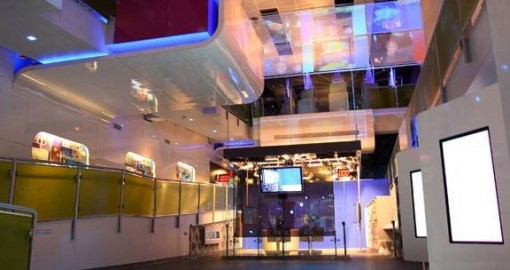
Nike and Sony offer two examples of massive flagship stores built more for their cultural impact than for their economic one. Niketown, “immerses the consumer deep into Nike’s Just Do It spirit. Everything in the space is geared towards the dynamism, energy, and competitive spirit that Nike represents.” Sony’s Wonder Tech Lab, on the other hand, is not even a store: it is purely aimed at entertaining and providing culture value to those who venture into it by demonstrating Sony’s latest innovations. The authors quote Sony exec Susan Sullivan, who explains that the goal of the Wonder Tech Lab is to “provide entertaining and educational experiences which lead to an understanding of communications, technology, and entertainment.”


Retailing a Theme Park Experience


Other than Disney, there is one retail brand that has gone beyond the traditional flagship store experience when it comes to making a cultural impact on its audience. That brand is Volkswagen. Located in the small town of Wolfsberg (near Germany’s capital, Berlin), Autostadt serves both as Volkswagen’s Headquarters and an amusement park dedicated to everything that the automotive brand stands for.


Featuring art, architecture, an IMAX cinema, flight simulators, pavilions dedicated to the many Volkswagen-owned brands, restauraunts, a five-star, five-diamond hotel, piazzas, bridges, lakes, kid’s playgrounds, grassy knolls, a museum, and two 120-feet high glass towers in which newly-built cars are stored, Autostadt is “a car theme park with almost no cars.”


As the authors write, its creators are clear that the experience that they’ve created is “not about cars.” It is, Chatel and Hunt write, “about ideas, images, and values. It is about creating experiences, engaging emotions, evoking memories and serving the customer with a smile.


Through our look at Retailisation, we’ve seen how the role of the retailer is shifting and changing in our busy and value-seeking lives. We want to be able to browse, shop for, and take home products as quickly and efficiently as possible, and digital and mobile—integrated with their physical brethren—allow us to do this. We also want to enjoy a time of leisure when we shop, to be entertained, and to perhaps even learn a little bit more about ourselves, and retail design is increasingly making this happen. Finally, we also want to experience brands and retailers in a context that goes beyond the traditional act of shopping, in spaces and places that offer us an enriching, branded, cultural experience.

With such a vast difference between functional, leisure, and cultural retail, one can’t help but wonder: what role will retailers play in our lives next?
Wednesday, September 26, 2012

Retailisation Series #2: Enchantment in a Disenchanted World

How retailers use design, architecture, and themes to rock your world


The Retailisation Series will spotlight how digital and architectural experiences are causing a shift in how brands, retailers, and shoppers interact. Inspired by the forward-thinking ideas in the 2005 book Retailisation: The Here, There, and Everywhere of Retail by Francesca de Chatel and Robin Hunt, each post will cover three different roles for retail in 2012 and beyond. The first post in the series covered convenience retail, and the role played by digital. This second post, "Enchantment in a Disenchanted World" will outline the impact of the physical space on leisure shopping, and will be followed in post three with an analysis of retail and culture.


Disenchanting Retail


Sometimes, convenience and quick, effortless shopping is not what we’re looking for from retail. There are certain times, and certain types of products, that demand that we experience them in the physical world as we shop—a process which, in many ways, we see less as shopping and more as leisure. As Chatel and Hunt note, this is most often the case when the purchase in question will have a major impact on our lives. “It is when we are thinking about ourselves and how a purchase could change us—when we think about buying that perfect suit or dress, that car or house—that we’re more likely to go and try it physically.” In these cases, online just doesn’t cut it: “The textures and metaphors of online shops are those of ease and efficiency, not of sophisticated, immersive experiences.”

More often than not, however, the physical retail experience can be just as mundane and disenchanting as the digital retail experience. Stores, after all, are mainly designed for one thing: to sell us stuff. There are shelves, there are aisles, and there are thousands of products just waiting for us to nab them as we patrol the sprawling venue with our shopping cart. They’re designed to be stocked, to be shopped, and to sell us products in the most efficient way. This type of retail design can lead to a mundane, mind-numbing shopping experience. This danger is highlighted by the authors as they cite sociologist George Ritzer, who wrote the book Enchanting in a Disenchanted World: "The spaces they create are often ‘disenchanting’ despite efforts to instill them with magical qualities" and that "there is real danger of people becoming bored by the ‘machine-like efficiency’" of the retail space.


A recent shopping trip to Staples Business Depot for some supplies sealed the images of “disenchanting” and “machine-like-efficiency” in my mind. Shopping for nothing more than a felt-tip pen, a sketchbook, and some Post-It notes, I was nonetheless open to browsing and picking up any interesting supplies that I may not have realized that I needed. Upon entering the store, however, I felt like a mouse trapped in a laboratory maze, with no sign of the cheese and no idea of how I would be able to find it. Row upon row of shelves towered over me, wrecking my sightlines. Products from all sorts of categories were everywhere: paper, desk chairs, TVs, printers, Bristol boards, and backpacks stared back at me wherever I turned. Somehow managing to find the items I was looking for, I made a bee-line for the exit and got the hell out of there. But retail doesn’t have to be this way.


Experiential Retail


In many ways, the physical retail space is moving away from just being a store that sells us stuff into something much more experiential (and as we’ll see, profound). In the right environment, shopping can be entertaining, fun, and a form of leisure. The retail experience can also provide a source of inspiration and stimulate our imaginations. David Peek, when interviewed by the authors, says: “Once basic needs are fulfilled, shopping becomes an act of self-fulfillment; it is a means of expressing oneself, adorning oneself…the purchase helps us imagine other lives and new possibilities.” Chatel and Hunt agree: “shopping becomes a lifestyle experience as well as a sensory experience where the consumer can touch, see, smell, taste, and enjoy the goods but also imagine owning them. People enjoy experiential shopping because it feeds their imagination.”


Feeding our imaginations can often result in retail experiences that are more like fantasy worlds than they are like stores or restaurants. Take the themed restaurants like the Rainforest Café and Planet Hollywood, for example. Both attempt to use thematic elements, in this case nature and celebrity, to build lasting and memorable experiences around the food. Many would argue that these retailers are selling the experience of being in them, and the inspiration and imagination that comes with it, and not the food itself. Chatel and Hunt note that “Retailers need to do this because all too often the reality of the merchandise is that it is unfulfilling, so it needs to be wrapped up in a dream. Through the creation of themed and artificial environments shopping is being transformed into a sensual experience, involving smell, sound, visual, and tactile stimulation, ‘delighting’ consumers and stimulating their imagination.”


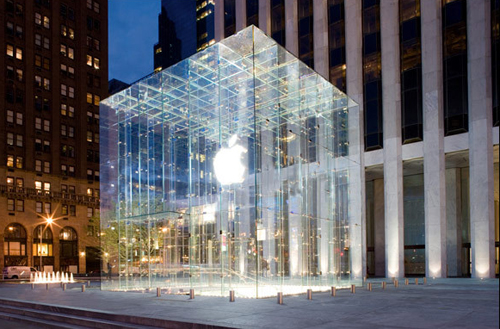
Then there is simply pure entertainment. The Australian urban architect Victor Gruen, the authors write, was one of the first retail designers to introduce the concept of entertainment to retail when he designed some of the very first shopping centres in the US in the 1950s and 1960s. He aimed to add as many functions as possible to the shopping experience, believing that retailers should be a place to meet, rest, and hang out. “Shopping malls,” Chatel and Hunt write, “became destinations in their own right where people did not come out of need…but for fun, to spend hours, if not days, wandering through fantastical landscapes escaping the realities of the exterior world.” Think about how fun it feels to play around with the latest iPad and tech gadgets in the Apple Store, or how nice it is to spend an afternoon drinking coffee and reading a magazine inside of a Chapters or Indigo Books store and you get the picture: retailers can be entertaining.


Retail as a Form of Self-fulfillment


Many retailers are going beyond entertainment and the sensory experience when it comes to providing an enchanting experience, with some even going for something much more spiritual and self-fulfilling. “Attempts to imbue the experience with spiritual values—be they mystical, mythical, or historical,” write the authors, “seek to create a sense of common heritage and tradition among shoppers who frequently have nothing in common save the space they choose to shop in. Tapping into the spiritual side of shopping, Peek speaks of ‘[mental] state management]’ and explains the power of design in inducing trance-like shopping moods.” Quoting Peek, the authors note: “Everything must be specified or the trance might break. [Retailers] are state managers; we do everything to get the customer in the right state of mind and then keep them there.”

What this emphasis leads to are retail experiences that are designed to make an impact on our lives. Retail architect Jon Jerde says, “We strive to give people the feeling that in the last ten minutes something significant has happened to them, something they might not understand, but which will give them a feeling of increased sensitivity and perception, the kind of feeling artists have. People are brought into a state in which they suddenly start to doubt the known, a state which is defined in art as ‘the suspension of disbelief’. Then they are open to new, richer experiences, experiences of their own…” This approach, Chatel and Hunt write, is “part of a move to ‘re-enchant’ the disenchanted world of consumerism. It is part of a wider phenomenon in which writers, thinkers, and designers are trying to ‘mollify the harshness of the modern world’ using wisdom traditions of the native Americans, Semitic traditions, and Buddhist cultures to revive the world around us.” They do this, of course, mainly through design: “We are being spoonfed ready-made experiences, herded along predetermined routes, lulled into quiet contentment as we wander through climate-controlled spaces on the backdrop of tuneless, soothing muzak.”


Sound familiar? Ikea is one example of a retail experience designed from the ground up to offer its customers some level of spiritual fulfillment. The authors argue, “Ikea’s mission goes far beyond just furnishing our homes; it aims to define our lifestyles and beliefs by inciting us to take control of our lives. [Ikea founder] Kamprad’s vision is in fact so far-reaching that he does not just aim to improve lifestyles but the people themselves. He does this by giving the ‘visitor’ – not customer or consumer – great autonomy. Self-sufficiency is the key: in-store there is minimal service, you choose, carry the goods yourself, take them home yourself, and also assemble them yourself.” Even the self-assembly aspect of Ikea’s retail experience is considered part of your self-development: “Kamprad believes it is good for you, and makes his visitors better people. The idea is based on a kind of ‘sharing philosophy’, where you take half the task of owning upon you.” The journey through an Ikea store, as well, can also be an experience of self-discovery. As Kamprad writes in A Furniture Dealer’s Testament, “Happiness is not reaching your goal. Happiness is being on the way.”


And so, physical retail experiences don’t always have to be mundane, soul-sucking alternatives to the act of buying the same products online. They can be experiences that delight, entertain, and invite us into fantasy worlds, and they can also be experiences that provide food for the soul, and attempt, through design, to change the way in which we view the world. In the final post in this series, we’ll see how some retail brands are attempting to appropriate elements of culture.

Thursday, September 6, 2012

Retailisation Series #1: The Quick and the Digital

How digital, mobile, and the virtual world are quickening the retail experience


The Retailisation Series will spotlight how digital and architectural experiences are causing a shift in how brands, retailers, and shoppers interact. Inspired by the forward-thinking ideas in the 2005 book Retailisation: The Here, There, and Everywhere of Retail by Francesca de Chatel and Robin Hunt, each post will cover three different roles for retail in 2012 and beyond. In this first post in the series, "The Quick and the Digital", we'll see how the Internet is turning shopping into a quick, convenient, and effortless process. In posts two and three we'll look at retail through the lens of leisure and culture shopping.


"Retailisation is the process by which retail is fighting back against a knowledge-rich consumer who has grown up in an era of mass ‘quality’ information about the things he or she consumes."


Retailisation and the Battle for Time


The first way in which the retail landscape is changing is in the notion of time. Shopping is becoming quicker, easier, and more effortless, and in many areas it no longer requires any thought or action on our part. As Chatel and Hunt point out at the beginning of their book, "time is a new battlefield on which retail engages." Many retailers have come to the conclusion that time, not goods, is the most precious commodity that they can provide their customers. After all, with all of the demands of work, family, friends, and life in the Internet Age, who has time to go shopping anymore? In many sectors of retail, convenience has trumped experience when it comes to getting good quality products and services at a fair price. We want to get our shopping done as fast as possible and then move on to bigger and better things.


What quicker and better way to shop than right where you are right now? Digital shopping, through both the Web, and more recently, mobile, is making shopping faster and easier than it has ever been. As Chatel and Hunt put it, “Digital home shopping is king: speedy and needful of your needs, not those of the retailer. No queuing, no stress, no traffic—just a slightly higher bill to pay for the service and delivery.” Think about the way in which we can now shop for everything from books to DVDs to videogames on Amazon.com, to electronics and gadgets from BestBuy.com and Futureshop.com, to health products, one of a kind items (Etsy.com) and even cars. If you can buy it out in the physical world, no doubt there’s a place where you can buy it quicker and faster online.


Digital is also changing the way in which we shop in the physical world, too, including where we choose to go and how we end up discovering new products. Social media, of course, has turned our Facebook timelines and Twitter feeds as sources of shopping inspiration and discovery. We can see what our friends and followers are shopping for or have bought, and guess what: we want it to. Why browse the streets when you’ve got your friends to do that for you? Online startups like Toronto’s ShopCastr have partered with local, independent retailers to bring window shopping to your desktop and tablet. Using the app, you can browse entire inventories of unique wares, tag the ones you like, and then head out to purchase them in the actual store when it’s convenient for you.


The Digital Dichotomy


But, although digital shopping has the ability to fill our baskets faster and run up our credit card bills in the blink of an eye, Chatel and Hunt are quick to point out that there is one major drawback: delaying one’s self-gratification during the wait for delivery. This dichotomy between working harder for immediate gratification (through physical shopping) and accepting delayed gratification in exchange for working less contributes tension to the digital shopping experience, resulting in our first retail dilemma. Is it better to go out and buy now, or stay in and consumer later? It also results in an inherent interplay between the benefits of both the digital and retail space. One provides us with limitless information, opinions, and content, the other gives us the opportunity to touch, feel, and walk something over to the cash register. As the authors illustrate: “Do we negate time and space and buy the object online using a credit card, waiting for delivery by the agency we have bought from? Do we make a choice by researching all the available information and opinion to guide us, find out how to buy what we want using the Internet, then purchase it in physical space? Or do we almost make a decision, then visit the most convenient store, mall, or agency to make the final purchase even if the choices are not perfect?”


One sector of retail that is feeling the effects of this interplay: big box electronic retailers. As the aforementioned Best Buy and Futureshop quickly began to realize, shoppers were using the Internet to quickly and effortlessly shop for and research products, building their shopping lists and learning all about what brands, features, and specs they should be looking for. They then headed over to their local retailer, where they’d test-drive the products they’d seen online, touch them, feel them, and then decide what they were going to buy. But instead of buying the product in the store, they’d head back home to buy it cheaper online—often at a different retailer’s website!


In response to this misuse of the physical retail space (from the retailer’s perspective, of course), Best Buy and Futureshop have recently implemented changes that seek to tie together the digital and retail shopping experience—making it both seamless and less likely that shoppers while switch to another retailer. Stores will now match any price for any item—both at another store and online, eliminating the need to buy online to get the cheapest price. They have also optimized the in-store pick-up of online orders: you can shop for, research, and buy products online, then, rather than wait for delivery, drive over to your local store and pick them up immediately. Whether you choose to shop digitally, physically, or somewhere in between, these retailers ensure that you’ll do it quickly, easily, and that you’ll do it with them.


Going Mobile and Bringing the Store to You


This leads us to the quickest and fastest way to shop: not shopping at all. After all, even browsing, researching, and ordering products and goods takes valuable time away from our busy day. Food still has to be ordered, shopping trips still have to be made, buttons still have to be clicked in order to get what we need as quickly as we need it. But technology is changing this dynamic, too—allowing retailers to bring their stores to us wherever we may be, and ultimately, delivering what we need when we need it without the need to even open our wallets.

Tesco's Virtual Store in a South Korean Subway

Tesco's Virtual Store in a South Korean Subway


Well.ca and P&G's Virtual Store in Toronto's PATH System

Well.ca and P&G's Virtual Store in Toronto's PATH System

P&G's Mobile Virtual Store

P&G's Mobile Virtual Store
By bringing the retail experience to traditionally non-retail spaces, we will soon be able to shop quickly and easily while on the go. In a recent pilot project in Asia, Tesco created a virtual pop-up store in the subway system. While waiting for the next train, shoppers could scan a virtual aisle of products, indicate which one’s they’d like to buy, and then check out before their train arrives. The products they’d order would then be delivered later than day. P&G recently tested their own version of a similar virtual store concept earlier this year in Toronto’s PATH system, in addition to a food truck-like mobile virtual store in the US.


Subscription services are also changing the way in which we shop by removing the need to shop entirely. P&G also has on online store and virtual subscription services that allow shoppers to receive their regular products, like diapers and cleaning gear, through the mail. The same services are cropping up for items like take-out food, too. Just-Eat, another startup born in Toronto, allows shoppers to order, pay for, and book food deliveries online, and in advance.


It is clear that when it comes to a quicker, more convenient retail experience, the ideal offering may end up being a combination of both the digital and the physical. As Paco Underhill puts it, “The future of shopping will be about the integration of online and real-world retail—it won’t be a choice between them.”
Archive
Copyright © The Planning Notepad, 2025