Showing posts with label Knowing your audience. Show all posts

Thursday, October 29, 2015

7 Keys to a Killer Presentation

...even the Undead will be awed and amazed!
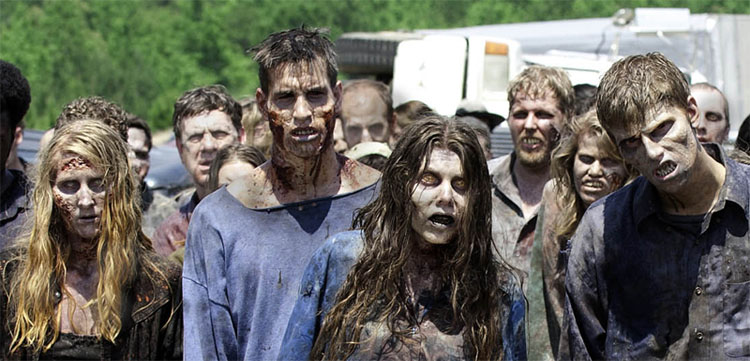
The Walking Dead

Do your presentations turn your audience into the sitting dead? Do you see lots of glazed-over eyes, drooling lips, and inexplicable calls for "brains... more brains!"

Sorry to say. It's not them — it's YOU.

You need a better presentation.

A killer presentation.

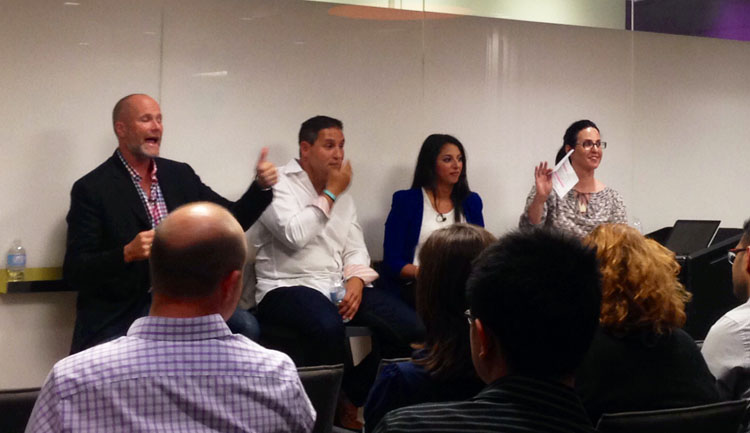
Luckily, I've got the 7 keys to a killer presentation right here — courtesy of North of 41's Killer Presentation panel @EnvironicsPR — just in time for Halloween. Brainssss!
Event Photo
Background: The Panel. Foreground: The Undead.


Key #1 — Don't get thrown off by the size and scale of your audience. Stick to the core of your story, narrative, or pitch — that should never change.

Key #2 — That said, push for interaction when your audience is small. Aim for more one-on-one connections, turn your presentation into a conversation.

Key #3 — Focus on preparation, not practice. Even the Undead appreciate spontaneity and unplanned anecdotes. Know your material, but don't memorize — mesmerize!

Key #4 — Develop a pre-presentation ritual that works for you:
(1) Find a quiet place to focus and psyche yourself up
(2) Introduce yourself to your audience and work the room
(3) Discreetly sharpen your machete (and/or sword)


Rick's Speech
"Me? You mean... me??!"


Key #5 — Start with a bang! (...not a groan.) Don't ease into your message. Grab your audience's attention and pull them into your roller-coaster story.

Key #6 — Try to connect with your audience on a personal level. Talk about something everyone can appreciate, show them you're one of them. Do you like brains, too?? Hell, that's a start!

Key #7 — Fact check. Then double fact check. Then... triple fact check. Don't blow your credibility with a misquote, mis-stat, or misfire. Be an expert on your information. Aim for the head!


Got another key to a killer presentation? Have a story to share? Comment below!

Tuesday, December 22, 2009

A lesson in the importance of knowing your audience - courtesy of Survivor

Funny thing happened on the finale of Survivor last night: the player that outwitted, outplayed, and outlasted just about everyone else on the island of Samoa didn't win. Russell H. had played the biggest, baddest, and most strategic game of Survivor - maybe ever - and yet when it came down to the final vote (in which the jury of players who had previously been voted out get to return one last time to vote for the million-dollar winner), he came up short. Second place is a tough pill to swallow when you're runner up to a girl who rode your coattails the whole way through and did nothing (at least on the surface) to deserve the million dollars.

And therein lies the key to not only nabbing enough jury votes to walk away with the big prize, but to great advertising: knowing your audience. Natalie, Survivor Samoa's big winner and Russell's sidekick the whole way through, may not have been as strategically dominant, but when it counted, she knew her audience and what they were looking for in a winner. Russell believed that everyone on the jury was as passionate and serious about the game as he was, and so they would assuredly give their vote to the one who played the best strategic game. Russell made all of the big moves, controlled the voting, found immunity idols without clues, and won the final endurance challenge - he would be a shoo-in. But that was his mistake. The jury was nowhere near as serious about the game as he was, and they in turn voted for who they believed played the game best from a social standpoint - that is, the one who didn't piss them all off!

Take a look at some of the things that the so-called "evil Russell" did during the early days on the island. In the first clip, Russell makes a "secret alliance" with just about every woman on his tribe and refers to them as his "dumb girl alliance", in the second he tries to cause chaos around camp by emptying out his tribe-mates' canteens and burning their socks. This will give you a good sense of how he played throughout.


Russell obviously knows what he's doing. It was day one and he was already playing out his strategy. He continued at it for the next 38 days until the grand finale, the final three. He brought with him two members of his original alliance from the old Foa Foa tribe: Mick and Natalie. These three each played the game differently, and in the following clip they explain to the jury why they believe they played the best game. Mick tries to play the "nice guy" card, but no one on the jury really believes he deserves the million dollars. He's a write-off. Natalie argues that she played a game that was just as strategic as Russell, but that she maintained a likable personality and made friends with people. Russell is confident that he played the ultimate strategic game and goes for the jugular, daring the jury not to give him the million dollars.


Once eight of the nine jury members had gotten a chance to say a few words and ask a few questions of the final three, things suddenly weren't looking too hot for Russell. Although much of the jury criticized Mick and Natalie for not doing anything to deserve the money, many of them also criticized Russell for playing an immoral game and pretty much acting like a snake the entire 39 days. The final jury member, Erik, put the nail in the coffin when he wondered out load whether it was possible for the person who believed they were least likely to win - the meek and sociable Natalie - to win it all.


That was it. It was time for the jury to cast their votes for the winner. At this point the result was very much in the air - would the jury give the money to the person they believed played the better strategic game, or simply the person who they liked a lot more? Here's how it played out:


Did you see the look on Russell's face? He couldn't believe it. He was shocked. How could they give the prize to Natalie over him? In this final clip, Jeff questions Russell as to whether Natalie outplayed him in the social aspect of the game - she was liked by more people, and that was their key criteria for the winner.


And so, Russell has taught us that the key criteria for judging the winner of Survivor is set by the candidate's audience, the jury, and not the candidate. In the same way, it's the consumer that decides whether an ad is a winner or not. The more we know about them, the better our chances are.

The tribe has spoken.
Archive
Copyright © The Planning Notepad, 2025