Showing posts with label Inspiration. Show all posts

Thursday, October 29, 2015

7 Keys to a Killer Presentation

...even the Undead will be awed and amazed!

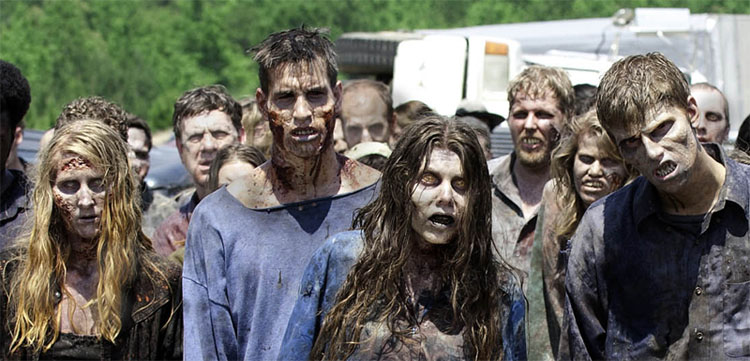
The Walking Dead

Do your presentations turn your audience into the sitting dead? Do you see lots of glazed-over eyes, drooling lips, and inexplicable calls for "brains... more brains!"

Sorry to say. It's not them — it's YOU.

You need a better presentation.

A killer presentation.

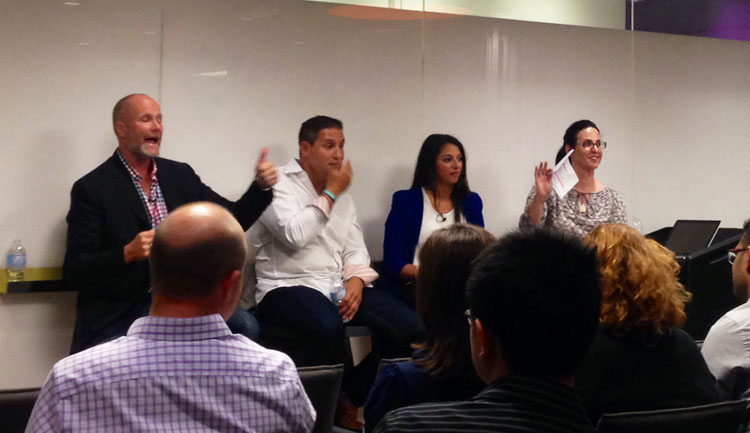
Luckily, I've got the 7 keys to a killer presentation right here — courtesy of North of 41's Killer Presentation panel @EnvironicsPR — just in time for Halloween. Brainssss!

Event Photo
Background: The Panel. Foreground: The Undead.


Key #1 — Don't get thrown off by the size and scale of your audience. Stick to the core of your story, narrative, or pitch — that should never change.

Key #2 — That said, push for interaction when your audience is small. Aim for more one-on-one connections, turn your presentation into a conversation.

Key #3 — Focus on preparation, not practice. Even the Undead appreciate spontaneity and unplanned anecdotes. Know your material, but don't memorize — mesmerize!

Key #4 — Develop a pre-presentation ritual that works for you:
(1) Find a quiet place to focus and psyche yourself up
(2) Introduce yourself to your audience and work the room
(3) Discreetly sharpen your machete (and/or sword)


Rick's Speech
"Me? You mean... me??!"


Key #5 — Start with a bang! (...not a groan.) Don't ease into your message. Grab your audience's attention and pull them into your roller-coaster story.

Key #6 — Try to connect with your audience on a personal level. Talk about something everyone can appreciate, show them you're one of them. Do you like brains, too?? Hell, that's a start!

Key #7 — Fact check. Then double fact check. Then... triple fact check. Don't blow your credibility with a misquote, mis-stat, or misfire. Be an expert on your information. Aim for the head!


Got another key to a killer presentation? Have a story to share? Comment below!

Wednesday, September 23, 2015

Please, close your eyes...

The New Culture of Slowness


You're busy. I know.

Well guess what: I'm busy, too! We're all busy — too busy to live in the moment, too busy to consider anything other than what's now, what's next, and how to get there as quickly as humanly possible.

That's why we get books like this...


...headlines like this...


...and even ads like this (unskippable, so even the busiest among us gets the point!)


But is this culture of busyness truly what we want?

Is it what anyone wants?


This summer, at the SummerWorks performance festival in Toronto, I got my first real taste of slowness: the culture of slowing down, breathing in the present, and being at peace with... well, nothing.


Meryem Alaoui's (@meryemalaoui) live art performance called "Sand Body" was at once sensory, while also anti-sensory. Amid a slew of productions bent on adding more (and more, and more!) to the live theatre experience (think audience voting, multimedia projections, and 3-D dancing skeletons... uh huh!), Sand Body was a stripped down exercise in patience and focus. Pun intended!


Audiences were asked to surround the performance area (in this case, the busy Factory Theatre lobby) and stay focused during the one-hour performance. While a minimalist, disembodied voice asked us to "Please, close your eyes", Meryem dressed down, moved slowly through the sand, and sometimes did nothing at all, all while crowds moved into and around the space, pulling on our attention with constant distractions.

Are you focused enough? In the moment? Patient?


Here's an excerpt from the Sand Body introduction:
In the future, will it be possible to slow down time, to live at a slower pace, or are we always going faster? 
We speed up time or slow it down. It has no speed. That's why the future can be hopeful. It never arrives. It's like the horizon. 
Would it not be ideal if we could move away from this constant progress towards the future? Away from productivity? Does this have anything to do with speed? 
Sometimes observing, listening, sensing is enough. It can be necessary even. 
...and sometimes waiting... patiently... 
Please. Close your eyes.

And, if you're patient enough, here's a clip of the performance:


Meryem isn't the only one that gets it. Corona has, for a while now:


Some workplaces are starting to get it...


...even schools are getting it, too:


Do YOU get it? Do your clients get it?

Take a moment to think about it.

But first: please, close your eyes...

Thursday, August 13, 2015

Wake up your creativity!

A morning of creativity and inspiration at CSI Annex


What do coffee, TED Talks, and Honest Ed's have in common?

Creative Mornings, of course!

Imagine an early-morning meeting you'd actually want to go to: good food (pineapples, grapes, whole-wheat croissants), good people (entrepreneurs, advocates, hipsters), and a little bit of inspiration from a well-worn speaker. And all in the lively, Central Perk-like coffee pub in the basement of CSI Annex.

Of course, Creative Mornings.

On Friday July 31st, the theme of this monthly meetup was urban farming. Specifically, the story of how @katie_german combined her love of farming with a desire to help inner-city kids learn some good ol' responsibility. Sharing her long, tireless journey as the co-ordinator of FoodShare's School Grown program, Katie inspired everyone to start thinking — and eating — like a farmer.

And then the pitches.

Capping off the morning, a handful of Creative Morningers took the stage to pitch their new projects. @kylebap spoke about the need for writers to actually, you know... write, and offered his new #WriteShopWeds meetup as a place to do so. For designers, we heard about The Station, a new co-working space and incubator for freelance creatives. Check them out!


To register for the next (free!) Creative Mornings event, go here and sign up for their newsletter. Make sure to register as soon as you get the invite, as the spots — and the food — disappear faster than free turkeys at Honest Ed's...

Good luck!

Saturday, June 27, 2015

So you're going to be a manager...

5 Ways to Lead Your Team to Success


In the marketing world, hell, in any world, management training is pretty sparse. We've all had managers, both good and bad, but we rarely get the chance to study them, to really learn from them and get trained by them, before — POP! — we become managers ourselves.

Luckily, Larry Chester, a leadership instructor at U of T's School of Continuing Studies, is hoping to change that. Speaking at a June 2015 SHAKER Professional event for U of T Alumni, Larry offered his own take on how you (yes, you!) can manage people effectively and lead your team to success.

Here are the highlights...


(1) Work through others

Managers don't work by themselves — they work through others. Focus your efforts on achieving results through the members of your team. Find out what they need to do their job well, then give it to them.

(2) Speaking of results...

Focus your team on the results — and the goals you've set as an organization — not the politics. This isn't about building fiefdoms or impressing the boss, it's about getting things done.

(3) Swallow your pride

As a manager, you can either be right, or you can make progress. Being right feels good, sure, but making progress as a team feels even better. Accept when your team members know more than you; allow them to be right and move forward together.

(4) Focus on the why

Yes, Simon Sinek, we're listening to you once again. When dealing with unacceptable behaviour or problems with getting results, focus on finding out why things are the way they are. Is someone struggling due to personal issues? Do they fully understand what's expected of them? Are they just really hungry? Start with the why, then help them understand why things need to change.


(5) Don't be a manager...

...be a leader. Remember, you're not just the functional director of your team, you're the emotional leader as well. Inspire hearts and minds, be the glue that holds everyone together, use your management IQ and your emotional EQ. Hell, get up there and dance, you leader, you! Soon enough, your team will follow.


What makes a good manager? Better yet, what makes a good LEADER? Share your comments below!

Wednesday, March 21, 2012

What Would Steve Do?

Three ways in which we can all "make like Steve" and achieve more success in everything that we do


It's been quite a while since I closed the book on Walter Isaacson's hefty bio on the late Steve Jobs. I've been meaning to write this post sooner—but perhaps the time away from the book has helped me reflect on what I truly took away from it.

Most people I've chatted with about Jobs' story seem to focus on his management style, personality quirks, and bi-polar point-of-view on the world. But there are several elements of the way Steve Jobs approached business that aren't directly tied to his personality, elements that we can all use to improve the way we solve problems, develop products, and build brands.

For one, a passion for what you do. Two, not settling for being "good enough" when you can be "insanely great". Three, the idea of "imputing" the values of your brand into everything you say and do. Enjoy my take on three of the things that Steve most definitely did

.


1. Bring Passion

The first thing that will help you "make like Steve" is to bring passion to all of the things that you do—or, at the very least, all of the things that you care about.

Jobs was passionate about his work at Apple, then NeXT, then Pixar, then Apple again, almost to a fault. He would cry during meetings and fights when things didn't go his way. He would fight his hardest for what he believed in, and would never give in. But most of all, he loved his work. When building the Macintosh, he saw himself and his Mac Team as the pirates within the growing company that was Apple, renegades who truly loved what they were building.

What does that mean for us? Should we start crying when meetings don't go our way? Or throw hissy fits when we don't get what we want? No, of course not. It just means that, wherever you're conducting yourself—be it at work, with a personal project, or within a group—bring passion. Show that you care. And then be ready to take a stand when it's something you truly believe in.


2. Be "Insanely Great"

What else would Steve do? Well, he strove to be, and to make things that are "insanely great", not merely "good enough", and that has turned Apple into one of the most valuable companies on the planet.

Jobs fought hard to take his products to the next level. While the rest of the computer industry was content to produce the same unimpressive products over and over, and consumers were content to continue buying them, Jobs approached product development much differently. He strove for greatness—to deliver experiences that were ten times better than what people were used to—even if they didn't yet know that there could be anything better. He even paid attention to the greatness of every last detail: I will never forget the story of how he made the Macintosh's designers re-do the design of the window's title bar over 20 times until it was easy on the eyes.

For us, the idea of building great things has fallen a bit by the wayside. With an overall lack of time, energy, and the riskiness of building new products in the first place, we generally strive for "good enough" - just do it, push it through, forget about it, and move on. In most cases, we're okay - our emails are "good enough", our presentations are "good enough", our products are "good enough". But every once in a while, we'll see an email, a presentation, or a product that's "insanely great", and we'll remember how much of a difference that approach can make.


3. "Impute" Your Values

Finally, Steve Jobs was obsessed with "imputing" the values of the Apple brand into everything it said and did, and in every aspect of how it presented itself.

Jobs understood that the little things matter, and that consumers and audiences were tuned—even if subconsciously—to pick up on small details and adjust their perceptions accordingly. The way he built his products and presented them to people was just an outward reflection of that deep understanding. The look and feel of the casing is important (I'm typing this on the smooth plastic keys of a MacBook Air, as my palms rest on its silky, stainless-steel surface). The packaging, and how the products look as you unwrap them, is important. Even the way that they're presented in the store is important. All of the touch-points between the consumer and the product were meant to convey one thing about Apple—premium. Simply put, Apple products make others look and feel like shit. Apple feels premium. And people will pay for their products.

This should be the number one take away for all of us. Every little thing says something about who you are. The way you dress. How you speak. The look and feel of your business cards. The small touches on your presentations. The thoughtfulness that's put into the things you produce. It all adds up to the person watching, the person judging, the person who is deciding whether you're worth their time or not. Jobs got it right: the details do matter. Find out what the values of your brand are and make sure that they shine through in every detail.


So, now you know the answer to the question "What would Steve do?" He brought passion to what he did. He strove for "insanely great". He tried to "impute" his values into every detail—even those that aren't visible. Now get out there and "make like Steve".

Monday, February 20, 2012

A Co-operative Model for Understanding Human Behaviour

What does it mean, when the modeller and modelled become a part of the model?


Don't get tongue-tied just yet. I was just as confused as you might be when I first heard Mihnea Moldoveanu, a professor from the Rotman School of Management in Toronto, speak about his new approach to modelling human behaviour, way back in the Fall of 2011. After digesting what he had outlined, however, and reading through his accompanying book - "Inside Man: The Discipline of Modelling Human Ways of Being", I gained a much better understanding of what he was getting at. In fact, the Co-operative Model for Understanding Human Behaviour that he was proposing follows in the exact same footsteps as Lean Thinking and Design Thinking - both of which I've covered extensively. So, although it was no surprise when I saw the same principles being applied to the study of human behaviour - it was no less interesting to hear about how it worked.


What's a Model?

Let's start at the beginning. Why try to model or understand human behaviour in the first place? The answer is simple: if we can build an understanding of how people behave, then we can predict how they might behave in the future, and in turn, influence it.

Models then, in turn, help us to frame that understanding in a way that other scientists can learn from and use. They are representations of "reality" - of behaviour or thought - that can be used to take us from a set of known or observed variables (like past choices, past thoughts and impressions) to a set of predictions about the future. Simply said, models explain and predict. To help with predictions, these models contain algorithms and formulas that help produce outputs (the predicted behaviour) from inputs (past behaviour). They help us "make inferences about what we do not know on the basis of what we do know".

Although mainly used in the social sciences, like Anthropology, models for understanding human behaviour are extremely valuable to marketers. After all - isn't the entire discipline of marketing about influencing consumer behaviour?


One-way Modelling and the "Old Science"

Traditionally, models in science have predominantly been one-way. What that means is that the scientist who is developing a model about why people behave the way that they do is never truly in close contact and co-operation with the people whom they are modelling.


In his book, Moldoveanu describes the aspects of the three types of traditional scientists:

Speculators: ie. Galileo, Newton, Einstein. They generate new distinctions and introduce new concepts
that are useful in describing, manipulating, and/or creating phenomena.
Calculators: ie. Laplace, Penrose, Thorne. They use the basic schemata articulated by speculators and perform the necessary logical and computational work that takes concepts to testable models.
Experimenters: ie. Kepler, Eddington, Penzias. They create effects in the laboratory and the field that are based on distinctions articulated by the speculators and sharpened by the calculators.

He also describes the three types of "Old Science" and their approaches to modelling human behaviour:

Descriptive Science: What is the case? Informs us about how people respond to certain actions and situations.
Normative Science: What should be the case? Informs us what logically and objectively the response would be to certain actions and situations.
Prescriptive Science: What should be done, given what we know about the case? Tells us how people should respond to an action or situation given what we know or what they know.


Ultimately, because of the way in which traditional scientists build models, and the way in which "Old Science" approaches process of modelling, they end up thinking of those being modelled as an "ideal type", "statistical ensemble", or a "norm". This really just means a stereotype. In order to keep models simple, they strive to avoid understanding people as individuals, with their own desires, beliefs, and reactions to the process of being modelled. They reduce complicated human beings into ideal agents that they can then fit into their models. This can lead to, to put it bluntly, bad predictions.


Co-operative Modelling and "Ascriptive Science"

The approach that Moldoveanu is proposing, however, is much different. Calling it "Ascriptive Science", his approach is a co-operative, live exercise in modelling human ways of being, through ongoing interaction between the modeller and the person being modelled.


Here are three ways in which this model is different:

(1) Modelling human behaviour, thoughts, and feelings is an interactive process between the modeller and the modelled. In a way, we're back to the idea of Customer Co-creation: the individual whose behaviour is being modelled is available to the modeller for questioning, deliberation, debate, and even confrontation; and the modeller will often need to use this opportunity for dialogue in order to better understand the behaviour of the modelled. In fact, the ongoing feedback cycle between the modelled and the modeller can lead to the production of new behaviour and new models to investigate.

(2) It treats the modelling languages and framework that it's working from as fundamentally unfinished and the modelling enterprise as an iteratively and self-correcting activity. Once again, we're back to the idea of Kaizen - of continuous improvement based on ongoing feedback. The model is no longer static, but a living, changing, evolving organism.

(3) It changes the subject being modelled. The models emerge as an interventional device and not merely a representational one. They can question the modeller, help to define the model, and even change their own behaviour in response to it. They aren't behind a one-way mirror - they're in the same room.


This approach, although some may see it as messy, ends up freeing the modeller to be more flexible in how they approach the process of modelling behaviour. The modeller is now free to:

  • Create models that answer the specific kind of questions they’re interested in
  • Interact with the subjects of the model
  • Force them into answering certain kinds of questions
  • Induce them to interpret themselves, to elaborate, and alter their behaviour

Unlike in the "Old Science", the modeller must deal with individuals in the present - the here and now, whose here-and-now predictions matter, and matter a lot. Experimenting, interrogating, training, and calling the modelled to task are all part of the process of Co-operative Modelling. The modeller says to the person being modelled, "help me understand".


This results in a type of scientist, the "Ascriptive Scientist", that is a hybrid of the three types of traditional scientists. Ascriptive Scientists draw on the core skills of each of the Speculators, Calculators, and Experimenters, and engage in the Normative, Descriptive, and Prescriptive behavioural sciences - all at the same time. As Moldoveanu explains it, "He speculates in that he uses and refines the basic distinctions made by Normative Science to put together structured models of behaviour, which he uses calculatively to make predictions about a subject’s behaviour and thinking, which he then tests by designing real-time experiments whose results he can then use to modify or fortify his speculative models."


Real-time experiments, customer co-creation, an iterative approach to developing new solutions - sound familiar? Yes, it's amazing how much the aspects of both  Lean Thinking and Design Thinking  are permeating every facet of both our lives and different industries - even behavioural science. The key takeaway from Moldoveanu's new approach - when you're looking to "model" your consumer's behaviour (that is, to understand, predict, and influence it), be open to doing it the co-operative, or Ascriptive way. Interact with the people whom you're modelling, involve them in the process of model-building, and be open to experimenting and testing that model as it evolves.

That's what it means when the modeller and modelled become a part of the model. Still tongue-tied?

Sunday, February 5, 2012

Design Thinking Series #3: Rapid Prototyping

"Fail fast to succeed sooner" - the essential paradox of Design Thinking


What's the easiest way, then, to "fail fast" - that is, quickly learn about what's working and what isn't? By making an idea tangible - something that your customers can touch, experience, and provide feedback on. In this final post in the Design Thinking Series, inspired by a lecture by Jeanne Liedtka and her book "Designing for Growth: A Design Thinking Toolkit for Managers", I'll detail what Lietdka calls "one of the most tangible differences between business thinking and design thinking" - the process of Rapid Prototyping.


First, a little about prototypes. The intent of building a prototype is to create a visual and sometimes experiential manifestation of an intangible concept - taking what has until this point just been words on a page and turning into something somewhat real. Rapid Prototyping involves an iterative set of activities that happen very quickly, as the concepts generated in the ideation phase gain detail, form, and nuance. They are brought to life.

Often, prototypes are "low-fidelity". That is, they are in just good enough of a state to be able to share with those whose opinions matter. As Liedtka puts it, "It’s easier to use an eraser on the drafting table than a wrecking ball on the building site" - and so low-fidelity prototypes aim to reduce the amount of effort that is required to learn. Often crude and unfinished in appearance, prototypes are supposed to look like works in progress, taking the form of storyboards, user scenarios, illustrations, or even working models that provide people with an experience.

Remember, we build prototypes in order to learn, not to test a theoretically finished product. By creating a compelling story that feels real to your audience of collaborators, you gain the ability to invite them into the conversation in an active, hands-on way. In a way, you've engaged them to become a part of the design process. By doing this, it ultimately allows you to make mistakes faster and identify areas that can be improved. Sooner is better than later!

Here's a quick run-down on how to get the most out of Rapid Prototyping:

(1) Start small and simple: the most successful growth projects prototype early and often. It leaves little room for interpretation and invites the user to contribute to it and complete it along with you.
(2) Figure out the story you want to tell: visualize the concept in pictures, using as few words as possible. Add complexity as appropriate as you go.
(3) Show, don’t tell: make the prototype feel real through mock imagery, artifacts, and experiences.
(4) Visualize multiple options: Create some choices to be made by your audience.
(5) Play with your prototypes, don’t defend them: let other validate them - not the people who created it.


“There’s something magical about low-fidelity ways of trying something out. It automatically allows people to feel like they can put their fingerprint on it. The more polished, the more done up it is, the more people feel like it’s already done. They feel like you’re not looking for feedback--you are looking for agreement.” - Christi Zuber of Kaiser Permanente

One of the aspects that often surprises business people the most is the idea of Customer Co-Creation - that is, involving your customers in the design process as early as possible. Yes, it can sometimes seem like it would be embarrassing to show something unfinished to your customers - you may even feel the need to apologize for it. Don't. Customer Co-Creation is an extremely powerful way of designing new things and both you and your customers will get a lot out of it.

To practise it, you'll have to invite your customers into the process of designing. Remember - innovation is about learning, and it's your customers who can provide you with the most to learn. The sooner you can put something in front of them to gauge their reactions and impressions, the sooner you'll get to a solution that adds value to their lives. Finally, Customer Co-Creation is actually very good for business, because it mitigates risk - they will tell you very quickly if there is something crucially wrong with what you're proposing.

Here's a run-down on some of the key things to think about when practising Customer Co-Creation:

(1) Enroll customers who care bout you. These are sometimes called the Early Adopters, or Brand Loyalists. You need customers you trust, people who are hungry for a solution and who are motivated to respond honestly.
(2) Choose a diverse group of people. Remember, even non-target customers may be just as helpful in providing feedback on what you are testing out.
(3) This is a no-selling zone: you're not selling them anything, and your customers should do most of the talking!
(4) Engage one customer at a time: aim for deep, qualitative feedback, rather than quantitative feedback that is light on detail. It's not about gaining statistically significant answers, but rather a deep understanding.
(5) Offer a menu of choices: presenting a single concept defies the purpose of co-creation, because there's no other solutions that your customers see. Give them options and explore the ones they’re most drawn to.
(6) Don’t make it too polished! People want to feel like they are free to help finish the experience.
(7) Respond fast: show them that you've used their input to refine the prototype, and gather more feedback still.


The final phase of Rapid Prototyping is the learning launch. This requires an advanced, high-fidelity version of the prototype that is suitable for testing in the live marketplace. This activity forms the bridge between Customer Co-Creation and the full roll-out of the new solution.

Remember, it's still not about how much you sell, but how much you learn. The data that you'll be gathering will be based on your customers' response to the prototype through actual behaviour, preferably over an extended period of time. Do people value it? Do they use it in the way that they said they would? Is there anything surprising about their behaviour?

Although still technically part of the Rapid Prototyping test, learning launches should still feel real to all participants. It needs to be tightly constrained in its execution, in space, time, and its audience. At the same time, it should still be open to major changes at the end as a result of what happened during the test. In the end, learning launches are still about testing some of the key assumptions that are tied to the new solution. Learning launches will inform you of which features to improve, which customer segments to focus on, and everything else that will be involved in the development of a new solution.


There you have it! After reading through the Design Thinking Series, you've hopefully learned a fair bit about what makes design very different than business, about the qualities of the designer and some of the core tenets of design, and about a key element of the design process, Rapid Prototyping. The only thought that I can leave you with: strive to think about how you can apply Design Thinking to different aspects of your business - whether it's how you develop your presentations, how you approach the development of a new idea, or even how your business itself is organized. But most of all, have fun!

Sunday, January 22, 2012

Design Thinking Series #2: Core Tenets of Design

What makes designers so unique?


To think more like a designer, and to apply Design Thinking principles to the way that you approach business and marketing, you first have to understand who designers are and, perhaps more importantly, how they approach their work. In this second post in the Design Thinking Series, inspired by a lecture by Jeanne Liedtka and her book "Designing for Growth: A Design Thinking Toolkit for Managers", I'll briefly cover some of the Core Tenets of Design, including some of the qualities that make designers - and Design Thinking - so unique.


"Don’t let your imagined constraints limit your possibilities, aim to connect deeply with those you serve, seek opportunities, not perfection."


Let's start off with designers themselves. What are some of the most important qualities of a gifted designer?

(1) They have an aesthetic sensibility: Designers, it may not surprise you, have a flair for the visual. They can visualize patterns, contrasts, what works, and what doesn't. They can express themselves through visuals, too - whether in a PowerPoint slide, on a whiteboard, or on a napkin. They can feel whether something looks right or not. Consider the lack of aesthetic sensibility that permeates the business world - can you remember the last good-looking PowerPoint presentation that you've seen? There's a lot to learn from designers when it comes to aesthetics.

(2) They inspire: Gifted designers aim to grab their audience at an emotional level. They don't settle for just agreement or moderate satisfaction - they aspire to surprise, delight, and elevate the response from their audience to the next level. As Liedtka puts it, "One of the saddest facts about the state of business is the extent to which we so often settle for mediocrity. Yet the difference between great designs and those that are only okay is the way the former call us to something greater."

(3) They invent: Gifted designers also think of themselves as creators. Compared to scientists, who investigate the present and look for explanations of what already exists, designers invent things for tomorrow - a future that doesn't yet exist. They create something that isn't. Designers always begin with questions like "What if anything were possible?" Ideas are, as Walt Disney once said, "created first in the mind and next in the activity."

(4) They iterate: Finally, gifted designers seem themselves as learners, constantly iterating and improving their solution based on ongoing feedback. While most managers have a linear problem-solving methodology - define a problem, identify various solutions, analyse each, then choose the right one - designers believe that successful innovation takes experimentation. To them, every problem is a possibility - one for learning, seeing, and responding to opportunities as they emerge.


Hmmm.. sounds interesting, right? But it's not just these qualities that make designers different than business people, it's how they work. Here are, according to Lietdka, some of the core tenets of design:

(1) Visualization: As mentioned above, an aesthetic and visual orientation is extremely important to designers. Pattern recognition, formulation, and expression are all a major part of the design process.

(2) Empathy: This is all about having a deep understanding of human needs, and focusing on meeting those needs when approaching problem-solving or creating value. Often, business people will start with the solutions and then retro-fit human needs into those solutions - designers don't work this way. Rather, they try to understand the emotional and rational needs of their audience, really "knowing" them as real people with real problems. The clues to the better future that designers are looking to create often lie with dissatisfactions with the present, and so designers look for those pain points and opportunities to improve people's lives.

(3) Exploration: This is the need for discovery. The design process is about constantly asking questions - What is? What if? What wows? What works? The process of ideation and brainstorming is based on the exploration of the question - if anything were possible, what would we be creating? Through exploration, designers attempt to describe what a new future might look like for their audience.

(4) Iteration: As mentioned earlier, designers view solutions as temporary stepping stones on the path to a better experience. Starting with tentative, low-fidelity answers, designers expect to improve it through experimentation and feedback. To them, small is beautiful - and so the process involves building a portfolio of small bets, presenting their audience not with fully-baked solutions, but with half-solutions - prototypes of the final experience.

(5) Co-Creation: Designers include their audience in the design process, collaborating with them to understand what's working and what isn't. They develop prototypes that are "good enough" to share with them sooner rather than later, and then test their assumptions with real people in real time. Their goal? Gather ongoing feedback that can help them improve their creations.

(6) Flexibility: Finally, the design process is a flexible one. Designers are always exploring multiple options as they listen to their audience and let them validate what is working. The process doesn't punish mistakes, but rather embraces trying things out.


Feeling a bit less like a business person, and more like a designer? Good. You've already read about the main differences between business and design. By now, hopefully, you have a better understanding of what makes designers so unique and a bit about how they work. In the final post in this series, I'll take you through one of the major activities that makes Design Thinking so much different than the traditional approach to business - Rapid Prototyping. Don't miss it!

Wednesday, December 28, 2011

Design Thinking Series #1: Business vs. Design

Order vs. Chaos. Logic vs. Empathy. Business vs. Design?


In this first post in the Design Thinking Series, inspired by a lecture by Jeanne Liedtka and her book "Designing for Growth: A Design Thinking Toolkit for Managers", I'll explore the eternal tension between the opposing forces of business and design. How does Design Thinking differ from the more traditional Business Thinking that most people with a marketing and management background are used to? What can we learn from design that can help bring greater balance to how we approach our work? Read on!

“Design teaches us to let go and allow more chaos into our lives. Designers lean into uncertainty, while managers often deny or fight it.”


First, let's talk about business, which, for most of us, is the status quo. The traditional business approach is logical, rational, and objective. It operates in a reality that is precise, and where everything is quantifiable. It seeks the "truth" - the "right" or "wrong" action in a given situation.

In order to get to that answer, business people aspire to achieve order and control. They build models, frameworks, and terminology, all to give them the feeling of being in control - the feeling that everything is in order. Organizations and processes are built in order to facilitate this need, as well - from check-ins and sign-offs to templates and hierarchies. Ambiguity and uncertainty make business people nervous and uncomfortable, because they crave predictability.

In business, innovation is viewed as risky, messy, and often an inefficient use of resources. Rather than create innovations from scratch, business people prefer to set "benchmarks" based on what their competition is doing and then react accordingly. They approach problems analytically, using a decision-making process that demands "proof" along the way, often using data generated in the past. Most of all, however, business is about talk - planning, forecasting, and analysing - not necessarily action.

“No amount of data about yesterday will solve the mystery of tomorrow.”

Business Thinking:
Rational
One Best Answer
Planning
Logic, Numeric
Pursuit of Control and Stability
Abstract or Particular
Focus on the present


Design Thinking is different - and probably not quite what you thought. Some might equate Design Thinking with creativity, artistic genius, and even magic. But there's nothing magic or random about it: Design Thinking is a systematic process to solving problems and creating value. It always begins with the customer and works to deliver something valuable to them by creating a better future. Most of all, however, Design Thinking recognizes that you probably won't get there the first time, but after multiple tries and improvements.


Interested? Then let's talk about design. The design approach is less logical and more emotional - it focuses on the human experience. It operates in a reality that is always defined subjectively by the people in it. The notion of desire - human desire - is viewed as a more powerful motivator than reason. To designers, there is no right or wrong, only "better" or "worse".

To designers, ambiguity and uncertainty are "like crack cocaine". Designers approach problems by actively imagining futuristic worlds to prototype and play in. They favour trying new things and seeing what happens over extensive planning and risk mitigation. Designers are overwhelmingly experimental in their approach, and have patience when it comes to feedback and failure.

Finally, Design Thinking is about second chances. They expect and plan to "iterate" their way to "better" answers. Design is about taking action - making things happen - and then responding based on how that action has affected the human experience. Hence, the data that drives the design approach is derived from real people in the real world - the here and now. Shoot first, adapt later - that is the design thinking way.

“While managers are showing spreadsheets--the ultimate abstraction--designers are telling stories.”

Design Thinking:
Subjective
Experimentation
Doing
Emotional Insight, Experiential Models
Pursuit of novelty, dislike of the status quo
Iterative Movement between Abstract and Particular
Focus on the future


So, what kind of thinker are you: business or design? If you're feeling like your approach tends to skew towards the business-side of the equation, then the Design Thinking Series is for you. In the next post in this series, I'll take a look at the Core Tenets of Design to better understand what makes designers tick, and in the third and final post, I'll explain one of the major activities of Design Thinking, and something rarely seen in the business world - Rapid Prototyping. Enjoy!

Wednesday, December 21, 2011

Becoming a Lean Thinker - Part 4

The "Becoming a Lean Thinker" Series is an account of your friendly neighbourhood Strategic Planner's transformation from a predictor to an experimenter - and my ongoing attempt to apply Lean Thinking to aspects of business, marketing, and even life!

So far, Part 1 covered the beginning of my journey, Part 2 spoke to the benefits of "Reducing the Feedback Cycle", and Part 3 took an idea "From MVP to Scalability". In the Final Part of this series, I'll share with you the last stage of my transformation - from a Strategic Planner to "The Eternal Experimenter"...


The Eternal Experimenter

Experiments. They are, and have been, a key part of the marketing and strategic planning practices for a very long time. Only that they haven't really been experiments in the true sense of the word. Today, when marketers and planners think about experiments, they think about "testing" - testing finished or near-finished creative ideas in environments that are meant to recreate real-world situations and experiences. Perhaps an ad is shown to someone within the context of a mock web page. Perhaps a focus group is walked through a series of storyboards, the moderator attempting to make them picture themselves watching a real ad, in the comfort of their own homes.

This experiment - or test - is different than the type of experiments that one will conduct when they're a Lean Thinker on two fronts: (1) Their objective; (2) Their context. First their objective: these tests are meant to predict real-world behaviour, not learn from it. The goal is to gauge the reactions of our audience in order to gain a better understanding of how the idea might work in market - these tests help us determine whether our prediction could be right, or whether it needs more work, before seeing the light of day. If Qualitative, the learning helps us reframe our idea or series of ideas and revise them to improve the chances of our prediction. If Quantitative, there's often a score - red light, yellow light, green light - that helps us predict - "with certainty" - how the idea will perform.

This takes us to point two, the context of the experiments. They're not conducted in the real world, with our audience in real-wold situations, making real-world decisions. In many cases, we make many efforts to replicate that real-world experience (ie. facilities that recreate the aisles of a store for test subjects to walk through), but it still isn't the same. This reinforces the fact that we're learning in order to help us make better predictions about the real world, rather than learning in the real world itself.


Lean Thinkers approach experiments in a completely different way. With the help of an MVP, their goal is to enter the real-world as soon as possible with an idea or product and learn from real-world behaviours. Part 3 in this series covered the "Build" part of the experiment process, but once that MVP enters the real world, the "Measure" and "Learn" part of the process begins, and things really start to get interesting. Since you're in the real world, approaching experiments in this way takes a bit of courage. But executing first and then experimenting is one of the major tenets of Lean Thinking.

For one, it helps you learn from real audience reactions. As Ries says in The Lean Startup, it's about "offering customers the chance to try something and then measuring their behaviour." It's not random, however. Experimentation begins with a hypothesis: a prediction about what effect a certain action or change will have. The test then validates or invalidates that hypothesis, based on a measurable and meaningful metric. Only when a experiment - a hypothesis about how an audience will react to an idea, product, or feature - has been conducted and measured successfully in the real world can it be said to be "validated".

Real world validation is another key part of the measurement process - it tells us whether we are on the right track and ready to either continue the experiment or scale, or whether we need to go back and modify the idea based on what we've learned. For example when tweaking their initial MVP, Ries wanted to learn which features would benefit the product and which would have no effect, or worse, detract from the experience. “The proof did not come until we put those theories into practice and built subsequent versions of the product that showed superior results with actual customers.” One of the key methods for testing ideas in the real world that Ries describes is A-B Testing. For example, whenever a hypothesis about a new feature or update was being tested, new users were split between two different versions of the site - one the original, the other revised. Based on the measurement and comparison of metrics that specifically link back to the hypothesis (ie. time spent), they could validate that the new version of the website actually improved the customer experience.


Once the performance of the idea, product, or feature that you've built has been tested and measured in the real world, the next step is to reflect on what you've learned. Have you "validated" your original hypothesis? Even if it worked, did it do so because of the reason you intended, or for some completely different reason altogether? If it wasn't validated, why was that the case? Did you make an incorrect assumption about the idea, the audience, or even the context? Learning about the reasons why an experiment worked or didn't work is essential in helping with the next phase of the experiment, which actually takes you back to the beginning of the process - Build.

Only this time you're no longer in the Build phase, you're in the Adapt phase. Revising something you've built - whether an idea, product, or feature - based on previous learning is just like adaptation. You're changing based on what you're learned, in order to increase your chances of real-world success. Adaptation brings us back to the idea of Kaizen - continuous improvement. As Ries describes in his book, this adaption doesn't have to happen slowly, it can happen extremely fast, so fast that an idea or product can be said to be rapidly evolving: "We change the product constantly--much too fast by traditional standards--shipping new versions of our product dozens of times a day." It sounds like a beast, a Chimera, constantly mutating and evolving based on the changes and reactions from its real-world environments, adjusting itself in order to remain on top of the food chain.

There is one caveat to being an experimenter, and it's a big one: you have to be flexible. If you haven't given yourself the leeway - whether through time, money, or resources - to continue to change and modify the idea, product, or feature, you won't be able to adapt. You'll be stuck. This lack of flexibility is typically the key barrier to becoming a Lean Thinker and practicing it in the real world. Not having enough time to change something, not having the money to change it (or having committed that money to something that can't be changed), or not having the resources to make change happen, reduces the flexibility that you have and forces you to stick with the original idea. Which means that whether it works or not becomes a major issue - if it doesn't work, you're going down with the ship! By making an extra effort to improve your flexibility and reducing the pressure of time, money, and resources, you'll be able to continue the experiment and find the right path to success - in business, marketing, and even life.


Conclusion

As I've written this series, I've realized a few things, both about Lean Thinking and about the best way to apply that thinking to my life.

First, Lean Thinking can be applied anywhere. Whether at work, in the gym, in the kitchen, or even in your inter-personal relationships, there are always opportunities to reduce the feedback cycle, go from MVP to scalability, and to become an eternal experimenter. Rather than approaching situations as a Go - No Go, Pass - Fail, one-time opportunity, or as a path that must be committed to for the long-term (no matter how it plays out), you can approach situations with an open mind, and the willingness to experiment. That part of my lesson was mind-blowing.

Now here's the more sobering part: it doesn't always work. Some situations, some contexts, call for more thought. They call for Strategic Planning in the traditional sense - doing lots of up front thinking in order to mitigate against defeat or failure. And so the lesson that I've learned is that it really isn't about being a Lean Thinker 100% of the time, it's about finding the right balance - between Lean Thinking and Strategic Planning - that gets the job done.

And with that, my journey was complete.

  • Reducing the Feedback Cycle
  • Going from MVP to Scalability
  • The Eternal Experimenter

Monday, December 5, 2011

Becoming a Lean Thinker - Part 3

The "Becoming a Lean Thinker" Series is an account of your friendly neighbourhood Strategic Planner's transformation from a predictor to an experimenter - and my ongoing attempt to apply Lean Thinking to aspects of business, marketing, and even life!

Part 1 covered the beginning of my journey and Part 2 spoke to the benefits of "Reducing the Feedback Cycle". In Part 3, I'll walk you through the 2nd core concept that helped turn me into a Lean Thinking Machine - "Going from MVP to Scalability".


Going from MVP to Scalability


“The goal of the MVP is to begin the process of learning, not end it.”
Eric Ries, The Lean Startup


Big. Bold. Perfect. National. Mass! These are all words that are traditionally associated with what businesses want to achieve with their marketing and advertising campaigns. Every year, significant amounts of research, planning, strategizing, and creative resources are spent drumming up a game-changing campaign that will be unleashed into the market and take a business' audience by storm. Round upon round of creative testing is conducted in order to predict - and validate - that the campaign will become a success. Nothing less than perfection will do.

The same syndrome affects the workplace, too. We'll often find ourselves slaving away at a report, powerpoint deck, creative brief, and even an idea for a breakthrough campaign, without letting the powers that be get a glimpse of it before it is "ready". We make sure that our blood, sweat, and tears have been pumped into the work so that when it's finally ready to be revealed, in all of its glory, its perfection will melt away any doubt that our audience might have felt about the quality of our work.

But the best case scenario - accolades and instant success for what we've produced - rarely happens, does it? Often there is something minor that needs tweaking, but even more often there is something significantly wrong, or off, about what we've been working on. A red flag was caught, or a poor strategy or idea was called out, and now it's back to the drawing board to figure out what to do next...


Enter the idea of the MVP - "Minimum Viable Product". Producing an MVP - before a finished product, report, or campaign - helps us avoid the wasted time and effort that comes with working on something that our audience doesn't like - or want. In many ways, being a Lean Thinker is about getting products into the hands of actual, live customers - be it your boss, or your consumer - and basing your learning on real audience behaviour, in context.

What is an MVP, exactly? It is the thing - be it a message, idea, or product - that you can produce with the minimum amount of time and effort in order to test a given hypothesis. In a nutshell, it means that you don't need to ideate and draw out the executions for an entire campaign before you're able to test whether your boss likes the idea itself and the campaign that surrounds it. A few pen strokes on a napkin can do that. Although the word "minimum" is a key part of an MVP, the word "viable" is important, too. You still need to build something that can stand on its own - like a complete idea or though, vs. half of one - before you can truly test out its potential.
"Instead of spending years perfecting our technology, we build a minumum viable product, an early product that is terrible, full of bugs and crash-your-computer-yes-really stability problems. Then we ship it to customers way before it’s ready. The minimum viable product lacks many features that may prove essential later on."
Building and putting an MVP into the hands of a live audience pushes us to test products, campaigns, or customer experiences in the field, in real-world situations, rather than just conceptually. And by thrusting our MVP into the real world - be it a grocery store or out boss' office - we're giving ourselves the chance to be surprised when our audience reacts and behaves in new and unexpected ways. We're giving ourselves the chance to learn as quickly and early as possible. Why should it take years to learn that the new product we invented is something that no one in the country wants? As Ries explains, "The level of learning [ from producing an MVP ] would have been the same, but our effort would have been dramatically less."


For marketers, and people in business, there is one aspect of the MVP that will be tough to get over: its apparent lack of "polish". Building a low-quality prototype - even an idea scrawled on a napkin - seems to go against our traditional views of quality. But, as Ries explains, "Discussions of quality presuppose that the company already knows what attributes of the product the customer will perceive as worthwhile." This might not necessarily be the case! Besides, "even a low-quality MVP can act in service of building a great high-quality product." The MVP is your chance to learn about what your customers - and your boss - care about. You must strive to "Remove any feature, process, or effort that does not contribute directly to the learning you seek." Worried about the impact of a live MVP on your company's brand name? Ries offers a solution: "Launch the MVP under a different brand name. Then do a public marketing launch once the product has proved itself with real customers."

The idea of an MVP isn't limited to just products, it can refer to markets - or "batches" - too. This idea is called “singe piece flow” in Lean Manufacturing, which simply means that each product is wholly built first before the next one. This is the opposite of the assembly-line, which attempts to efficiently product a slew of products, piece-by-piece, before any of them see the light of day. “Batch size” refers to how much work moves from one stage to the next at a time. The goal should be to keep the "batch size" as low as possible so that you can measure how a live audience reacts to a product without building hundreds of them. For example, rather than producing three different versions of a TV spot, why not test one of them in-market first?

Ries cautions, though, that when it comes to testing MVPs, not every kind of audience member will be as forgiving of its flaws. "The point is not to find the average customer," he says, "but to find early adopters: the customers who feel the need for the product most acutely. Those customers tend to be more forgiving of mistakes and are especially eager to give feedback.” And the best part of starting with an MVP first before putting in loads of effort? Once you learn what's working, you can put more effort into that aspect of it and make it grow, which is called "scalability". You can quickly work to expand its reach beyond early adopters and into the mainstream, as well as expanding its feature set or experience based on whatever worked best. In other words - once your boss approves of your napkin, you can go ahead and expand that idea into a campaign. ;)


Okay! We're gearing up for the last part of the "Becoming a Lean Thinker" Series, and the final part of my story. Here's what we've covered so far, and the last core concept of Lean Thinking that helped turn me into a believer:
  • Reducing the Feedback Cycle
  • Going from MVP to Scalability
  • The Eternal Experimenter

Stay tuned! :)

Tuesday, November 15, 2011

Becoming a Lean Thinker - Part 2

The "Becoming a Lean Thinker" Series is an account of your friendly neighbourhood Strategic Planner's transformation from a predictor to an experimenter - and my ongoing attempt to apply Lean Thinking to aspects of business, marketing, and even life!

Part 1 told the story of the gut-wrenching beginning of my journey. Part 2 will take you through the 1st core concept that helped to win this skeptic over - "Reducing the Feedback Cycle".


Reducing the Feedback Cycle


 A "Feedback Cycle" is not a scary thing, oh no. We encounter them every day. When we check for grey hairs on our head in the morning. When we think about how much time we wasted in meetings all morning, even when we check the battery on our cell phones to see how much juice we've got left for the day. Feedback Cycles, at their core, tell us how we're doing. We're either doing well, need to tweak a few things to get where we need to be, or we're failing terribly. Simple as that. The Feedback Cycles I just described can happen once, but more likely several times a day.

Tuesday, November 8, 2011

Becoming a Lean Thinker - Part 1


"Everything that I know about marketing, about business, and about life... is wrong."

That was the gut-wrenching, head-spinning thought that was running through my head, just minutes into a presentation by Eric Ries, an experienced developer and author of The Lean Startup. I was sitting in the conference room of U of T's Rotman School of Management on a chilly September afternoon, packed shoulder-to-shoulder with aspiring business-types and veteran entrepreneurs, and I felt like I was going to be sick. With no barf bags in sight, I sucked it up, took a deep breath, and listened. And my mind was subsequently blown.


That was the day that I began my transformation into a Lean Thinker. Which is kind of funny - ironic, even - because being a Strategic Planner is, in essence the opposite of being a Lean Thinker. Planning is about upfront research and investigation, the distillation of insights into calls-to-action, and about testing - testing to oblivion - to ensure that an execution will perform when it's live in the marketplace. It's about prediction, assumptions, and not necessarily about being accountable for whether or not they were true. To be a Lean Thinker, however, is to be an experimenter. It's about upfront execution and learning, taking action, and testing products and messages in market from the get-go. It's not about prediction, it's about validation, and retaining the flexibility to scale once you've learned what's true, what works, and how to optimize. Quite frankly, it's a wholly different approach than what I'm used to, and what the marketing and advertising industry is used to.


Where did this approach begin? Its origins can be traced back to concepts from the manufacturing industry in Japan, with its mantra of Kaizen ("continuous improvement"), as well as methods pioneered by the Toyota Motor Company - like Lean Manufacturing (using flexible and adaptable machines) and the Just-in-time delivery of auto-parts (bringing them into the manufacturing process only when they are necessary). You can also find its forebears in software development (Agile), Design Thinking, and even Direct Marketing. Regardless, Lean Thinking has now taken over the entrepreneurship and Startup space - which encourages people to take the Lean approach when building a technology-centric business.

At its core, Lean Thinking is a philosophy, an approach, that changes how products are built and launched, how marketing campaigns are brought to market, and even how you can live your life. In his book, Ries summarizes it as "an extremely fast cycle time, a focus on what customers want (without asking them), and a scientific approach to making decisions." I would distill it down to one word - "learning". To me, becoming a Lean Thinker has meant a strict devotion to the idea of continuous learning, based on actions and experiments in the real world, and using feedback to progressively improve products, campaigns, and ultimately, you.


But wait... how did I eventually overcome my initial sickness, my pain-inducing rejection of the idea? In the next three parts of this month's series, "Becoming a Lean Thinker", I'll walk you through the three core concepts of Lean Thinking that won me over, and why
The Lean Startup book isn't being used as my coaster. Those concepts are:
  • Reducing the Feedback Cycle
  • Going from MVP to Scalability
  • The Eternal Experimenter
Stay tuned! :)
Archive
Copyright © The Planning Notepad, 2025